RDF Processing Plant
Turning the non-recyclable fraction of municipal waste into a consistent alternative fuel.
Refuse-derived fuel, made to specification
Refuse-derived fuel is what remains once recyclables and organics have been pulled out — plastics, textiles, paper and other combustibles with real calorific value. Cement kilns, industrial boilers and waste-to-energy plants will buy it, but only if it meets their specification consistently.
Our RDF lines are built around that specification: target calorific value, maximum moisture, maximum chlorine and a defined particle size, delivered batch after batch.
The processing sequence
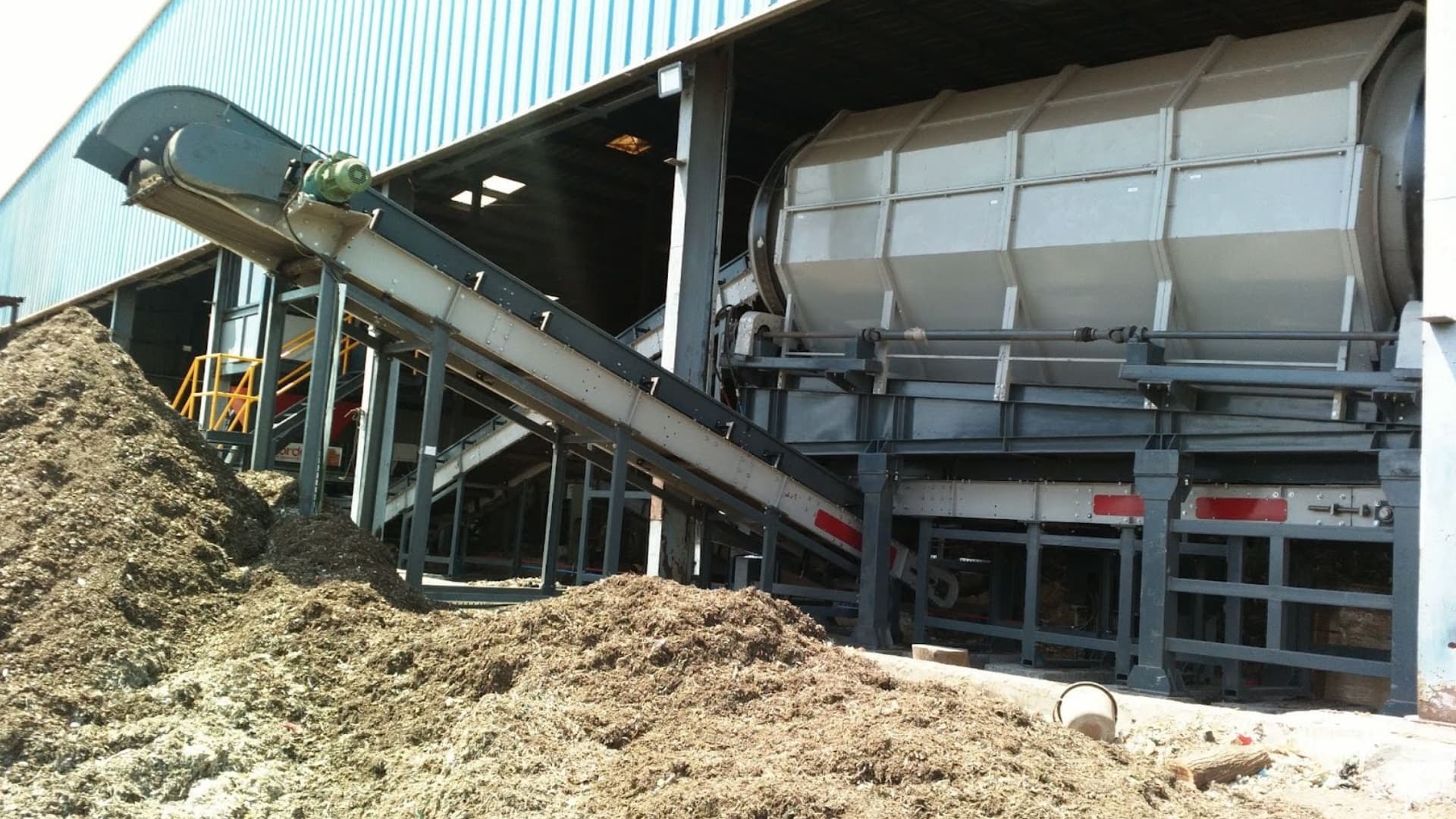
Incoming waste is pre-shredded, screened to remove fines and inerts, passed through air density separation to remove heavies, and cleaned of ferrous and non-ferrous metal.
The light combustible fraction is then dried to bring moisture within specification and secondary-shredded to the required particle size before baling or direct conveying to storage.
Line components
Primary Shredders
Low-speed, high-torque shredders that open and coarsely reduce mixed waste without jamming.
Trommel Screening
Removes fines, grit and inert material that would otherwise depress calorific value.
Air Density Separation
Isolates the light combustible fraction from stones, glass and other heavies.
MSW Dryers
Thermal drying that brings moisture content down to the level buyers specify.
Metal Separation
Magnetic and eddy current stages that protect downstream kilns and recover metal value.
Secondary Shredders & Balers
Final size reduction to specification, then baling for efficient transport and storage.
Why RDF makes commercial sense
- Converts a disposal cost into a saleable product.
- Displaces coal and petcoke, lowering the buyer's carbon intensity.
- Dramatically reduces landfill volume and associated liability.
- Consistent specification builds long-term offtake relationships.
- Integrates cleanly with an existing MRF as the residual outlet.
- Supports compliance with SWM Rules on landfill diversion.
Let's come together to make cities clean, and farms green
Talk to our team about your waste processing requirement — we will get back to you within one working day.